

Table of Contents
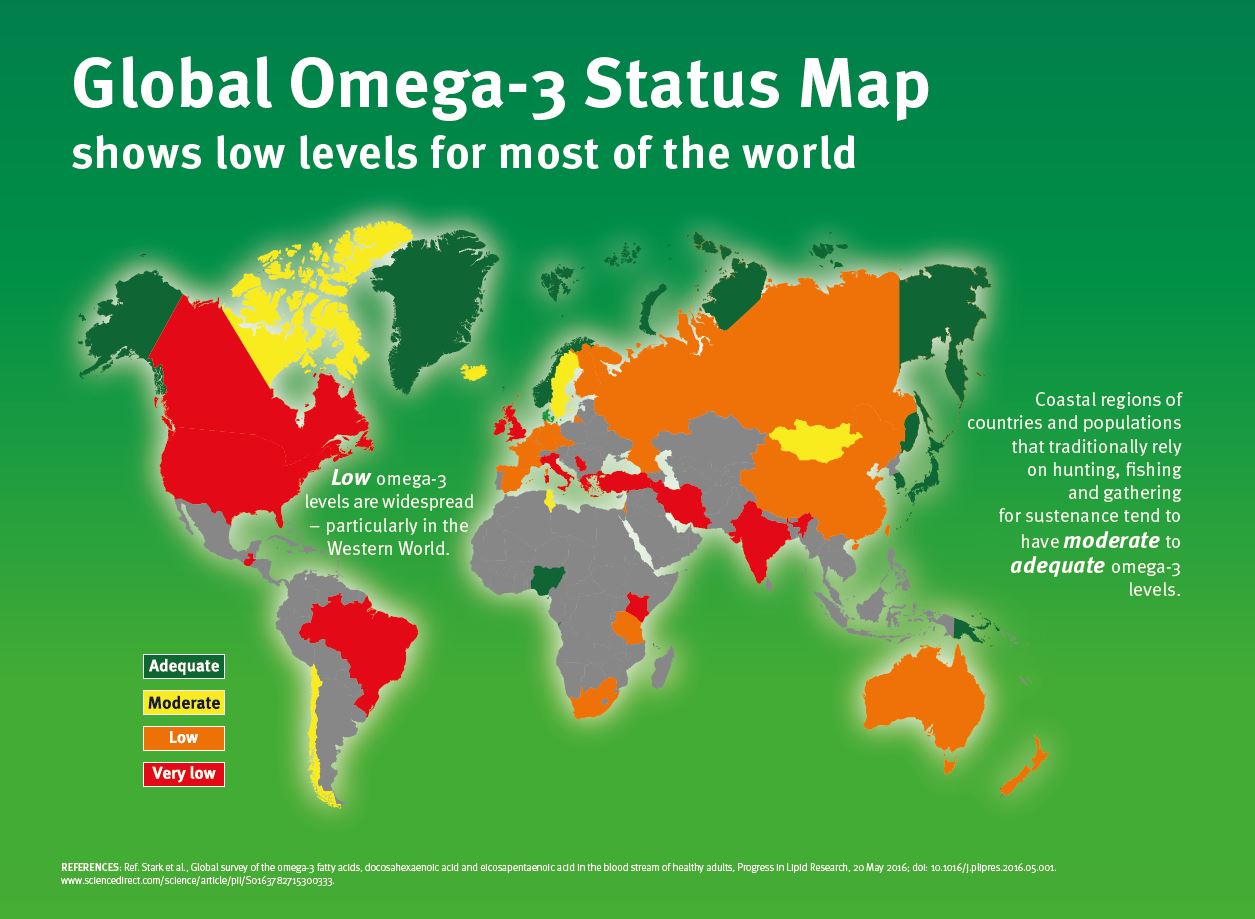
Global Omega-3 Deficiency in 2025 Overview: Despite growing interest in nutrition and preventive health, omega-3 deficiency remains a major global public health concern in 2026. Recent studies show that 76% of the world’s population does not consume recommended levels of the essential long-chain omega-3 fatty acids EPA (eicosapentaenoic acid) and DHA (docosahexaenoic acid). These nutrients are crucial for heart health, brain function, eye health, inflammation regulation, and metabolic balance, yet most diets provide far less than needed.
Shifts in eating habits — including reduced oily fish consumption, reliance on omega-6-rich processed foods, environmental impacts on marine sources, and misconceptions about plant-based omega-3s — have widened this gap. Many assume plant oils or basic supplements meet their needs, but these often fail to deliver bioavailable EPA and DHA.
This article explores the prevalence of global omega-3 deficiency in 2026, its health implications, and evidence-based strategies to address it safely. Prioritizing quality sources, forms, and absorption helps optimize long-term health.
What Is Omega-3 Deficiency?
Omega-3 fatty acids are essential fats that the body cannot produce adequately. EPA and DHA — the marine-derived long-chain forms — are biologically active and support key functions.
- EPA helps maintain healthy inflammatory responses and cardiovascular function, including normal blood vessel activity.
- DHA is a major structural component of brain tissue, retina, and cell membranes, essential for cognitive performance, visual health, and neurological integrity.
Plant sources like flaxseed, chia, and walnuts provide ALA (alpha-linolenic acid), but conversion to EPA and DHA is inefficient — typically below 10% for EPA and under 5% for DHA in most people. Plant sources alone rarely supply sufficient bioactive forms.
Omega-3 deficiency is usually chronic and subtle: a persistent shortfall below optimal levels for physiological function, rather than an acute deficiency. This long-term inadequacy contributes to population-wide health risks.
Latest Evidence on Global Omega-3 Deficiency (2024–2025)
Recent global reviews (2024–2025) confirm widespread EPA and DHA shortfalls. A major 2025 collaborative study, in which researchers from the University of East Anglia, University of Southampton, and Holland & Barrett analyzed omega-3 intake recommendations and actual consumption patterns worldwide, found that 76% of the global population does not meet recommended levels of EPA and DHA. This result means a significant public health gap across all ages and regions, regarding fatty acid levels.
The issue is prominent in low-seafood diets but affects higher-income countries too, due to processed foods, omega-6-rich oils, and infrequent oily fish consumption. Most guidelines recommend at least 250–500 mg combined EPA + DHA daily for adults, with extra DHA during pregnancy.
This intake gap is nutritional, not clinical, and spans demographics. Greater awareness of nutrient balance is needed.
Why Most People Lack Enough EPA and DHA
Dietary habits and barriers drive this deficiency:
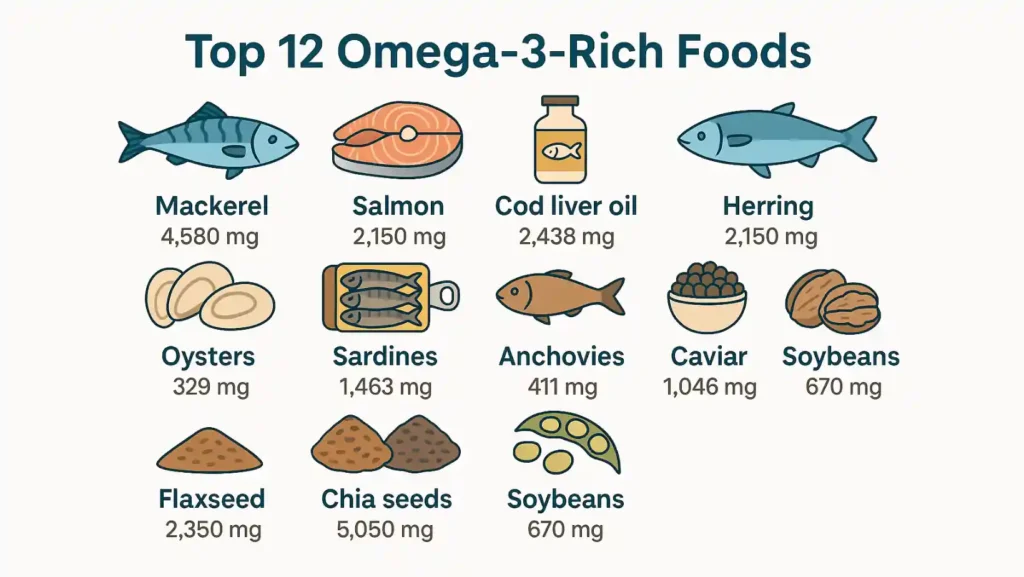
- Low oily fish intake: Salmon, sardines, mackerel, and anchovies are top sources, but many eat them irregularly or prefer lean varieties.
- Accessibility issues: Cost, availability, taste, vegetarianism, or sustainability concerns limit consumption.
- Dietary imbalance: High omega-6 from processed foods competes with omega-3 pathways.
- Supplement misconceptions: Labels often highlight total oil rather than EPA/DHA content, leading to under-dosing.
Why EPA and DHA Matter for Health
EPA and DHA support normal physiological processes:
- EPA aids inflammatory balance and cardiovascular health.
- DHA maintains brain, neuronal, and retinal structure.
- Together, they enhance cell membrane fluidity for better signaling.
Adequate intake sustains long-term balance without claiming disease treatment.
Food vs. Supplements: Can Diet Alone Suffice?
Ideally, diet provides enough EPA and DHA via 2–3 weekly servings of oily fish. In reality, lifestyle, access, cost, preferences, or restrictions make this challenging for many.
Supplements offer a practical complement — not a replacement — for reliable intake when food falls short.
How to Supplement Safely and Effectively
Focus on:
- EPA + DHA content (not total oil).
- Doses in accepted ranges (e.g., 250–500 mg daily for maintenance; higher under guidance).
- Taking it with fatty meals for better absorption.
- Consistent use for membrane incorporation.
- Choosing high-quality, certified omega-3 supplements only — look for third-party testing (e.g., IFOS, GOED), low oxidation (TOTOX values), re-esterified triglyceride (rTG) forms, and pharmaceutical-grade purity to ensure safety, bioavailability, and real benefits.
A standout example of a revolutionary, high-quality option is MVS Omega-3 from MVS Pharma.
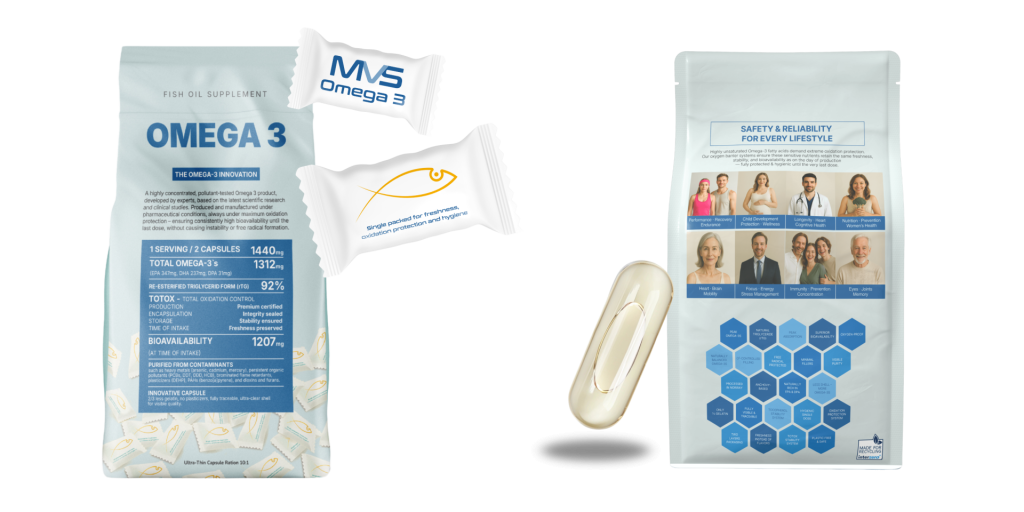
- This revolutionary new golden standard supplement delivers over 90% pure omega-3s in a highly bioavailable 92% re-esterified triglyceride (rTG) form, with 758 mg EPA and 362 mg DHA per serving (2 capsules) for optimal cardiovascular, cognitive, and cellular support.
- It is produced under pharmaceutical supervision by certified professionals.
- It features innovative, ultra-thin, clear capsules for full transparency
- Dual-layer inert-gas packaging
- Individual sealing of each capsule to guarantee exceptional freshness and prevent oxidation from production to the last dose.
- All stages documented and inspected — from filling to final packaging.
- Independently certified by IFOS, FOS, and GOED, with rigorous testing for pollutants and heavy metals.
MVS Omega-3 sets a new standard in purity, stability, and trustworthiness — making it an ideal choice for safely closing the omega-3 gap.
Common Supplement Mistakes to Avoid
- Choosing “high-dose” without checking quality or oxidation risk.
- Taking on an empty stomach (reduces absorption).
- Skipping third-party tested products (risks, impurities, or degradation).
- Accepting fishy burps as normal (often signals poor quality).
Prioritizing Quality and Preventing Oxidation
Omega-3s are prone to oxidation from heat, light, or oxygen, reducing effectiveness and causing discomfort. Choose products with:
- Rigorous purification.
- Antioxidants.
- Independent testing (e.g., low TOTOX values).
- Opaque/dark packaging.
Closing the Omega-3 Gap Long-Term
Addressing the global EPA and DHA shortfall requires a sustainable, evidence-based approach that goes beyond short-term fixes and aligns daily habits with the body’s ongoing need for these essential fatty acids.
The strongest foundation is increasing intake of oily fish like salmon, sardines, mackerel, or anchovies — ideally 2–3 servings per week. This provides highly bioavailable EPA and DHA alongside other nutrients like vitamin D and selenium for optimal absorption and health benefits.
For many people, however — due to cost, availability, taste preferences, dietary restrictions, or sustainability concerns — consistent fish consumption is challenging. In these cases, high-quality omega-3 supplementation serves as a practical and reliable solution.
Key principles for effective long-term supplementation include:
- Focusing on verified EPA + DHA content (aim for 250–500 mg combined daily for general health).
- Choosing third-party tested products with low oxidation levels (e.g., certified by IFOS or USP).
- Opting for superior forms like re-esterified triglycerides, phospholipids, or algae-based oils for better absorption and fewer side effects.
- Taking supplements with fatty meals for improved uptake and incorporating them consistently into daily routines.
Sustainable options like algae-derived omega-3s also support vegan diets and reduce environmental impact.
Ultimately, closing the gap long-term is about realistic, informed choices: prioritize natural food sources where feasible, and use dependable, high-quality supplements when needed. This consistent approach helps restore EPA and DHA sufficiency, supporting cardiovascular health, brain function, inflammatory balance, and overall vitality in today’s evolving food landscape.
Conclusion
The 2026 global EPA and DHA shortfall stems from dietary shifts, not lack of awareness. As processed foods rise and seafood declines, achieving adequate long-chain omega-3s via food alone is tough for most.
This subtle gap impacts cardiovascular, brain, cellular, and inflammatory functions gradually. Evidence-based solutions include more oily fish where possible, plus quality supplementation as a reliable tool.
Key factors: EPA/DHA focus, oxidation control, third-party testing, proper dosing, and meal-time use. Aligning intake with biology through informed, consistent choices optimizes physiological function and supports health amid evolving diets.
FAQs
-
1. What is global omega-3 deficiency, and how common is it in 2025?
Global omega-3 deficiency is the widespread low intake of EPA and DHA. Studies show 76% of the world’s population falls short of recommended levels due to low fish consumption and processed food diets.
-
2. What are the main symptoms of omega-3 deficiency?
Symptoms are often subtle: dry skin, joint discomfort, fatigue, mood swings, poor focus, and dry eyes. Long-term, it may affect the heart, brain, and inflammatory health.
-
3. Why do most people lack enough EPA and DHA in 2025?
Main reasons: infrequent oily fish intake, high omega-6 processed foods, poor ALA conversion from plants, plus cost, taste, and sustainability barriers.
-
4. How much EPA and DHA should I consume daily?
Aim for 250–500 mg combined EPA + DHA daily for general health. This equals 2–3 servings of oily fish weekly or quality supplementation.
-
5. What is the best way to supplement EPA and DHA safely?
Choose high-quality, certified supplements with verified EPA + DHA content in bioavailable forms (e.g., rTG). Take with fatty meals. A top option is MVS Omega-3: over 90% pure, 758 mg EPA + 362 mg DHA per serving, IFOS/GOED-certified, with advanced freshness protection.

